In the heart of Alicante, between Montgó and the cape, is the Cape San Antonio in Jávea. This place promises to be an incredible tourist destination by 2025.
It is perfect for those who love nature and want to escape from the everyday.
Cabo San Antonio is a key place in Jávea. Here you can live Jávea in 2025 in a unique way.
You will enjoy new activities and an improved infrastructure for your visit.
El Cabo is located between Jávea and Dénia, on the Costa Blanca. It not only shows the best of Jávea, but also invites you to live unique experiences.
With each visit, you will discover something new and exciting in this special place in Spain.
Key Concepts
- Discover the natural and cultural beauty offered by Cabo de San Antonio in Jávea.
- Enjoy an enhanced summer months tourism experience for the year 2025, including leisure and relaxation activities.
- Visit emblematic points such as the lighthouse and the panoramic views of the Mediterranean.
- Explore the endemic flora and fauna in the Montgó natural park and around the cape.
- Take advantage of Cape San Antonio ‘s privileged location for water and hiking activities.
- Benefit from infrastructure improvements aimed at optimizing tourism in Jávea.
- Experience the contrast between the tranquility of the natural environment and the dynamism of the updated tourist proposals.
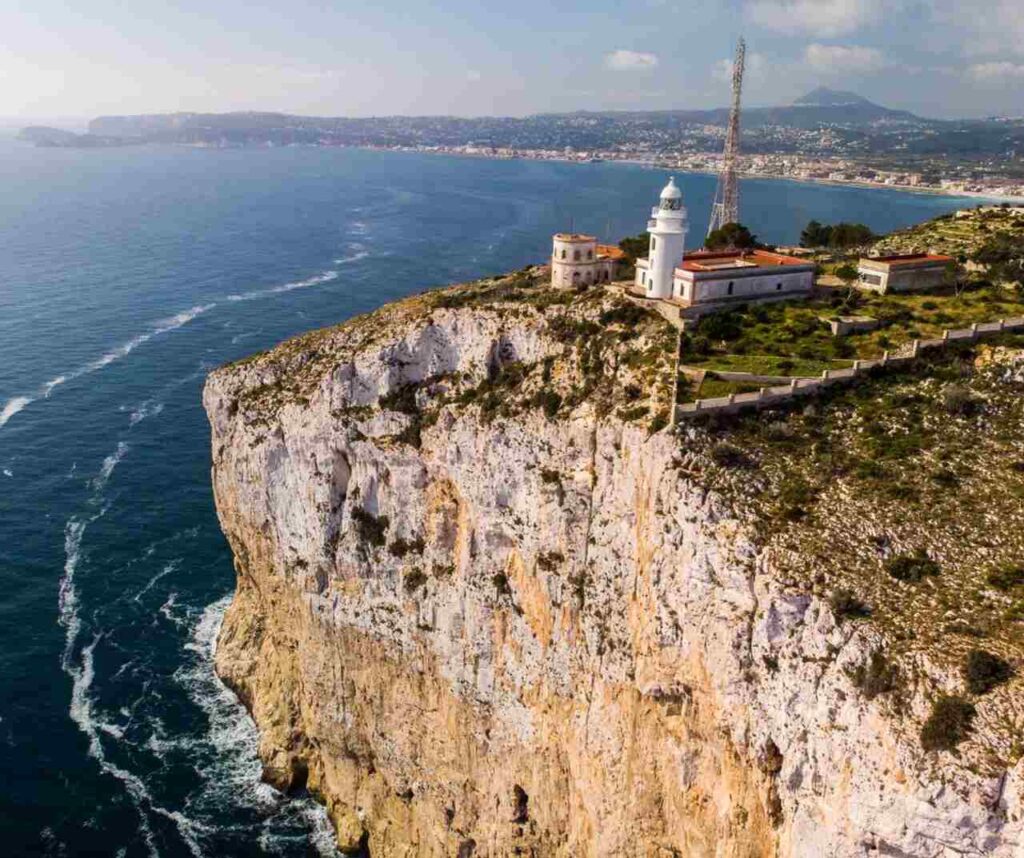
- Cape San Antonio rises between 150 and 175 meters above sea level, highlighting the lighthouse at its highest point.
- The Cova Tallada is an impressive cave carved into the rock next to the Mediterranean Sea, within the Montgó Natural Park.
Explore the Lighthouse and the Incredible Views from the Cape San Antonio Lookout Point.
The lighthouse of Cabo de San Antonio is in the province of Alicante. It is not only a lighthouse, but a cultural and visual place.
It was built in 1855 and has guided many sailors through the Mediterranean Sea.
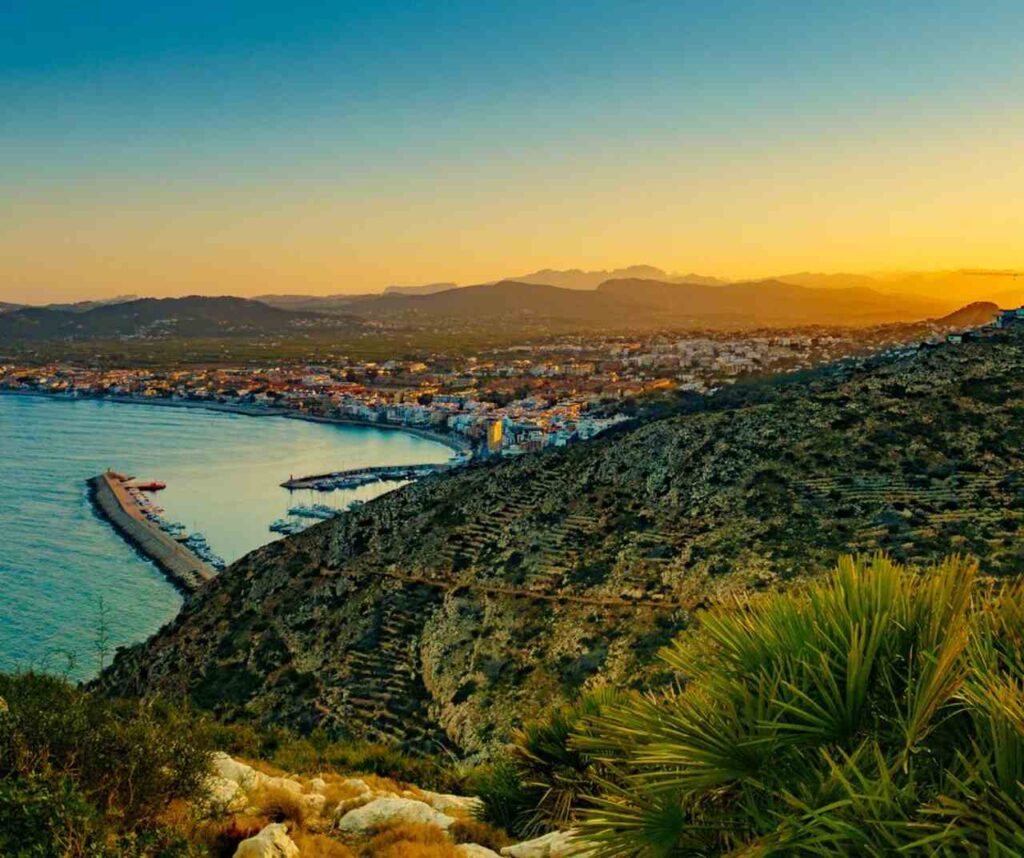
From there, you can see incredible views. You can see from the coast of Jávea to the waters of the port of Jávea.
History and Significance of the Cape San Antonio Lighthouse
The 1855 lighthouse has been a guiding lighthouse. It is key to navigation on the Costa Blanca. Its structure is emblematic and represents the maritime history of the province of Alicante.
Panoramic views of the Mediterranean and the coast of Jávea
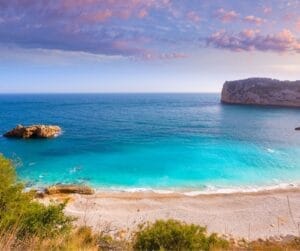
From the viewpoint near the lighthouse, you can see panoramic views of the Mediterranean Sea. Watch how the waves touch the coast of Jávea.
These incredible views are ideal for photos or simply to enjoy.
How to Get to the Lighthouse and Best Times to Visit
To get to the lighthouse, go to the cap de Sant Antoni. Follow the signs from the port of Jávea. There is a parking area for visitors.
The best times to visit are at sunrise or sunset. The sun illuminates the landscape in a spectacular way.
It is perfect for romantic getaways or unforgettable photos.
Discover the Montgó Nature Reserve and Natural Park
To explore the marine reserve of the cape and the natural park of Montgó is to enter a world full of life. Here, the biodiversity is incredible.
This protected site, in the Marina Alta, is home to many species.
Flora and Fauna Endemic to Cap de Sant Antoni
You will see unique species such as the ifach silene and the Audouin’s gull. The diversity of flora and fauna in this natural park is amazing.
There are from underwater posidonia meadows to the cliffs of Cap de Sant.
The conservation of these species and their homes is very important. The reserve plays a key role in the protection of marine fauna.
Hiking and Routes Around the Cape
- The Cap de Sant road has hiking tra ils with incredible views. You can see the bay of Javea and beyond.
- There are lesser known trails that will take you through rocky landscapes and Mediterranean forests. You will discover the rich vegetation at every step.
Cape san antonio and other outstanding experiences
The nature reserve is perfect to enjoy both on land and in the water. You can snorkel or dive in clear waters.
Posidonia meadows are a vital marine ecosystem for many species.
These activities are fun and also educational. They teach you about the importance of conserving our seas.
Cape San Antonio Jávea: A Treasure between Denia and Javea
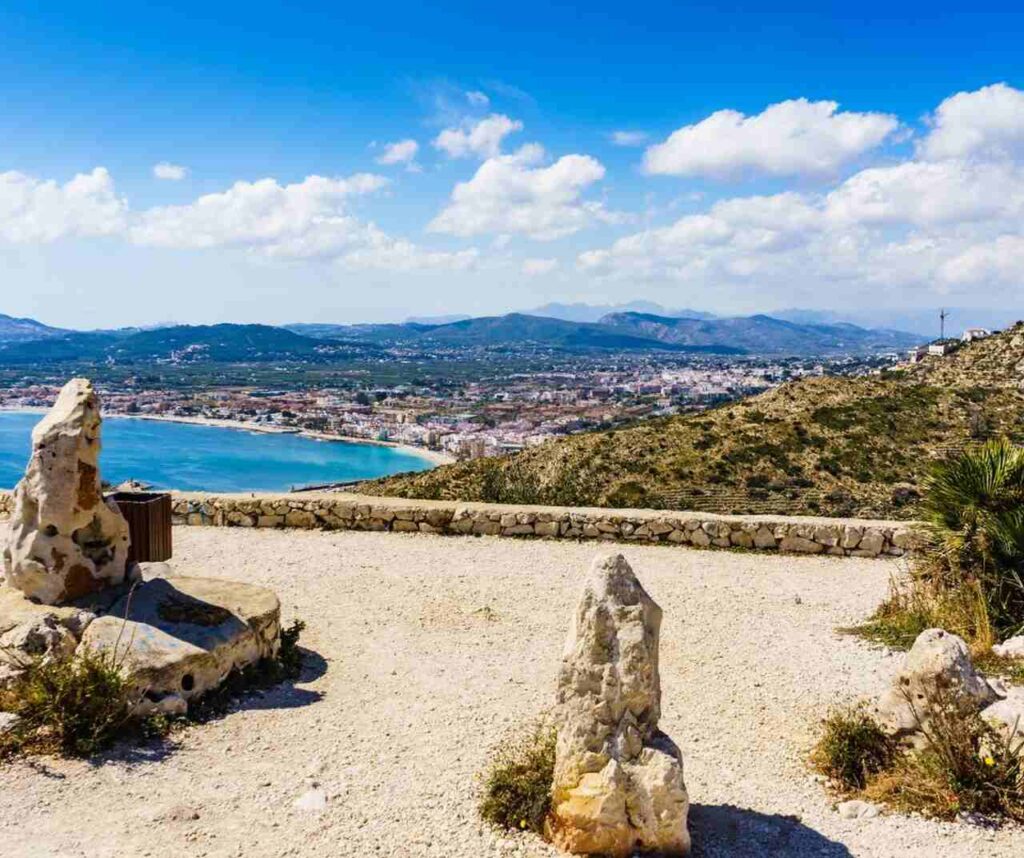
Cabo de San Antonio is located between Denia and Javea. It not only offers breathtaking views of the coast. It also culturally unites these two coastal towns. At the foot is the marine reserve dedicated to the conservation of species in a scientific and ecological way.
This site is a very important underwater ecosystem in the Gulf of Valencia.
From the Cape, you can see the port of Javea. To the northeast, the famous silhouette of Cabo de la Nao is visible.
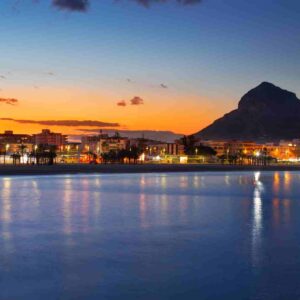
To the south, Jávea and Denia meet the Montgó, a mountain that marks the natural and cultural landscape.
- Admire the encounter between the sky and the sea in the breathtaking views of the coastline offered by the cape.
- Explore the mysterious seabed in a protected area, key to the biodiversity of the Cape San area.
- Visit the busy and vibrant Port of Javea, a place where fishing tradition meets tourist bustle.
Cape San Antonio is a geographic jewel. It is vital for the conservation of the nature and culture of the area.
Its location, between Denia and Javea, and its marine biodiversity highlight its importance. Not only for the Gulf of Valencia, but for the entire Mediterranean.
Conclusion
The Cabo de San Antonio Jávea, declared a nature reserve, is a special place. It offers incredible views of the Mediterranean Sea.
The island of Ibiza can be seen from there, calling out to nature lovers.
In summer, the Cape comes alive. It is a perfect place to enjoy the outdoors. Here, nature is king.
This place is a marine reserve. There is a lot of marine life and unique plants, such as the Silene de Ifach. It is ideal for diving and exploring.
The reserve is perfect for hiking. You can discover caves and see rare animals. The trails are exciting and make you imagine.
It is crucial to take care of this place for future generations. Sustainable tourism is key to its conservation. We invite you to explore and care for this treasure.
FAQ
What tourist attractions stand out in Cape San Antonio by the year 2025?
In 2025, the 170-meter-high Cape San Antonio is famous for its nature.
It has a 19th century lighthouse and views of the Mediterranean Sea. There is also the Marine Reserve and the Montgó Natural Park, full of life.
What is the history of the Cape San Antonio Lighthouse and why is it important?
The lighthouse was built in 1855. It is key to navigation in the Mediterranean. It offers incredible views and is a unique cultural experience.
How can I get to the Cape San Antonio lighthouse?
To get to the lighthouse, take the Cap de Sant Antoni road. There is a place to park. Visit it in summer for better views.
What endemic species can be found in Cape San Antonio?
In the Cape, they are home to a multitude of unique species such as the ifach silene and Audouin’s gull. They are located in the Natural Park of Montgó and the marine reserve.
Are there hiking trails available in Cape San Antonio?
Yes, there are trails to explore nature. They allow you to see the diversity of flora and fauna.
What water activities are allowed in the Cape San Antonio Marina?
You can snorkel and dive in the marine reserve. Especially in the posidonia meadows. These activities protect the environment.
How does the location of Cabo de San Antonio between Jávea and Denia influence its tourist value?
Its location between Jávea and Denia enriches the tourist offer. It adds value to the landscape and allows you to enjoy incredible views.
What is the ecological importance of the Cape San Antonio Marine Reserve?
The Marine Reserve, a protected area, protects the most important underwater ecosystems.
With an extension of 110 hectares, it is one of the most important areas for conservation in the Marina Alta.
Is it possible to see the island of Ibiza from Cape San Antonio?
Yes, on clear days you can see the island of Ibiza from the viewpoint. It is 170 meters above the sea, offering panoramic views.
What is being done to preserve Cape San Antonio?
Cabo de San Antonio is a nature reserve and part of the Montgó Natural Park. It works to protect the local fauna and flora and its ecosystems.